Europe is experiencing one of the most destructive wildfire seasons in its modern history, with official monitoring data showing that more than one million hectares have burned across the European Union this year. The scale of the damage has exceeded previous benchmarks and significantly outpaced the two-decade average, raising renewed concerns among climate scientists, emergency agencies, and policymakers about the continent’s preparedness for prolonged extreme heat.
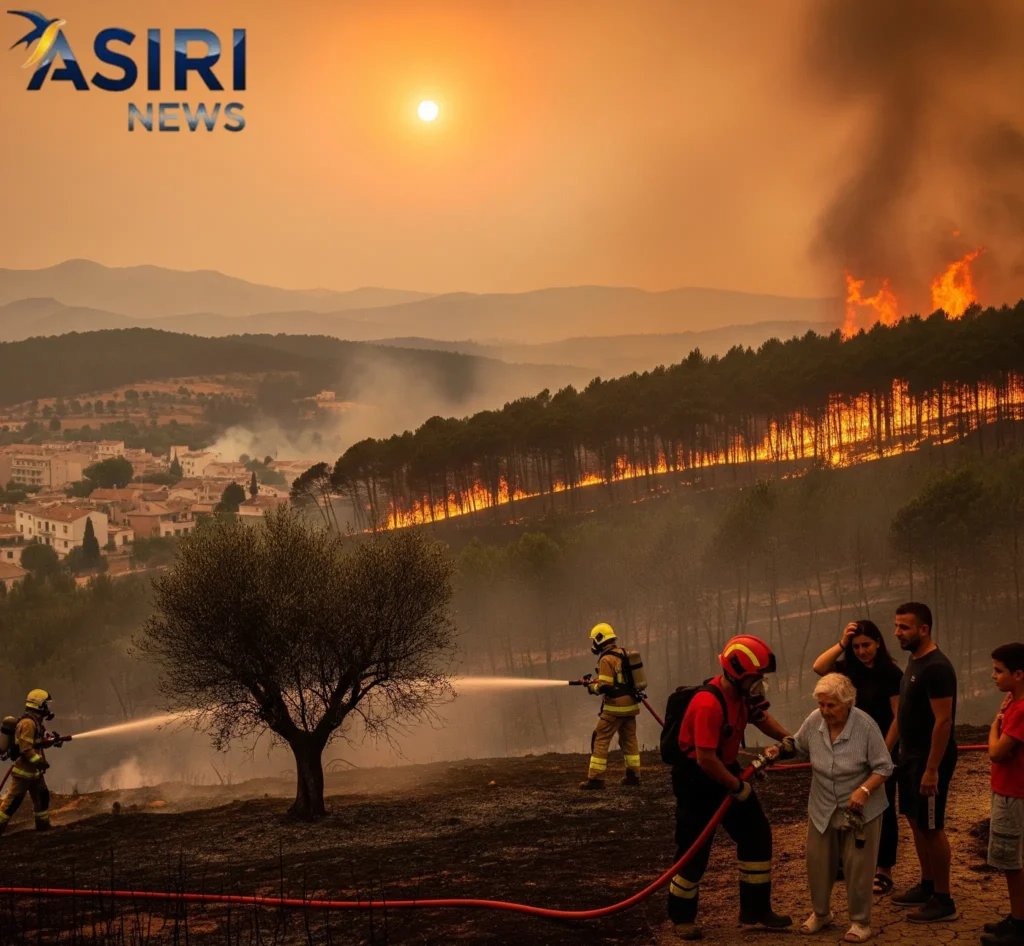
The most severe impacts have been concentrated in southern Europe, particularly in Spain and Portugal, where prolonged heatwaves and dry conditions created ideal conditions for fast-moving fires. According to monitoring systems coordinated under the European Forest Fire Information System (EFFIS), Spain has recorded hundreds of thousands of hectares lost, marking one of its worst wildfire years in decades. Portugal has also seen extensive damage, with several large blazes spreading rapidly through mountainous and forested regions.
Emergency authorities in both countries have carried out mass evacuations as flames approached residential areas and rural communities. Thousands of residents were temporarily displaced at the height of the crisis. Firefighters from neighboring European countries were deployed under EU civil protection mechanisms, reflecting how cross-border coordination has become increasingly necessary as wildfire seasons intensify.
The human toll has been significant. Fatalities have included civilians caught in rapidly advancing fires as well as emergency responders working in high-risk conditions. Beyond immediate loss of life, the psychological and economic effects on communities are expected to persist long after the flames are extinguished. Homes, agricultural land, livestock facilities, and tourism infrastructure have all suffered damage, placing additional strain on local economies already facing inflation and energy pressures.
The transportation network has also been affected. Road closures, rail disruptions, and temporary shutdowns of popular travel routes have interrupted both domestic mobility and international tourism flows. For countries like Spain and Portugal, where summer tourism contributes substantially to GDP, extended wildfire activity carries broader economic implications.
Scientists attribute the severity of this wildfire season to a convergence of structural and environmental factors. Southern Europe endured extended heatwaves, with temperatures repeatedly exceeding seasonal norms. Prolonged drought conditions dried out forests and grasslands, while strong winds accelerated the spread of flames. Researchers have long warned that climate change increases both the frequency and intensity of such heat events, a trend explored in Eke News’ broader climate reporting, including analysis of record heatwaves that have fueled wildfire vulnerability.
Land management patterns have also played a role. Rural depopulation across parts of southern Europe has led to abandoned farmland and reduced forest maintenance, allowing combustible vegetation to accumulate. When ignitions occur—whether from lightning strikes or human activity—fires can spread with greater intensity. Experts increasingly argue that prevention strategies must combine climate mitigation with improved land stewardship, including controlled burns and vegetation management.
The environmental impact extends beyond the immediate destruction of forests. Wildfires release significant quantities of carbon dioxide and particulate matter into the atmosphere. This year’s emissions from European fires have reached levels that threaten to undermine progress toward emissions reduction targets. The feedback loop is concerning: hotter conditions increase wildfire risk, and wildfire emissions contribute to further atmospheric warming. A similar pattern of climate-driven strain is evident along the Atlantic basin, where economic assessments such as the rising annual cost of climate change along the U.S. Gulf Coast show how extreme weather events are reshaping public budgets and insurance systems.
Across Europe, policymakers are now facing mounting pressure to accelerate adaptation strategies. The European Union has strengthened its joint firefighting fleet in recent years, pre-positioning aircraft and emergency crews during peak risk periods. However, experts caution that emergency response alone cannot offset the structural drivers behind intensifying fire seasons. Long-term planning must address forest resilience, water management, urban planning in fire-prone zones, and broader climate mitigation commitments.
Insurance markets are also monitoring developments closely. As wildfire frequency increases, underwriting risks rise, potentially affecting property premiums in vulnerable regions. This mirrors broader financial system concerns about climate exposure, which have surfaced repeatedly in global economic discussions covered in Eke News’ market reporting, including recent volatility in global markets amid shifting policy signals. Climate risk is no longer viewed as purely environmental; it is increasingly treated as systemic economic risk.
Ecologically, the long-term consequences depend on the type of vegetation affected. Some Mediterranean ecosystems are adapted to periodic fire and can regenerate naturally. However, repeated high-intensity fires reduce biodiversity, degrade soil quality, and increase erosion risks. In mountainous regions, post-fire flooding and landslides often follow once protective vegetation has been removed.
While wildfire has always been part of Europe’s environmental cycle, the scale and intensity observed this season reflect changing baseline conditions. The combination of rising temperatures, altered rainfall patterns, and evolving land use has created a more volatile landscape. Scientists stress that adaptation and emissions reduction must proceed simultaneously if future seasons are to be less destructive.
As containment efforts continue, attention is shifting from immediate firefighting to recovery and prevention. Rebuilding infrastructure, restoring damaged ecosystems, and compensating affected communities will require sustained financial and political commitment. For European governments, this wildfire season has become a test of both emergency capacity and long-term climate planning.