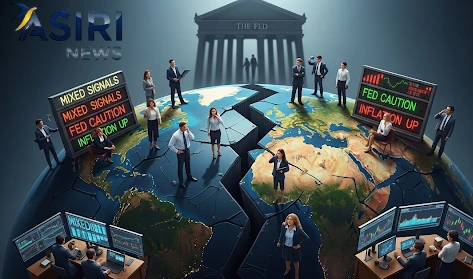
Central bankers gathered at the annual Jackson Hole Economic Symposium with an unusual undercurrent shaping discussions: politics. While the Wyoming conference traditionally focuses on inflation, growth forecasts and monetary strategy, this year’s meeting was marked by growing concern over political pressure on the U.S. Federal Reserve and what it could mean for global financial stability.
Several policymakers privately and publicly warned that sustained attacks on central bank independence — particularly in the United States — risk undermining a principle that has anchored global monetary systems for decades. The issue gained urgency amid renewed public criticism of Federal Reserve Chair Jerome Powell by President Donald Trump, who has called for aggressive interest rate cuts to stimulate economic growth.
why independence matters
Central bank independence refers to the ability of monetary authorities to make decisions on interest rates and liquidity without direct political interference. Economists widely argue that insulating monetary policy from short-term electoral pressures helps prevent inflationary cycles and maintains long-term credibility.
At Jackson Hole, European Central Bank policymaker Olli Rehn and Bundesbank President Joachim Nagel emphasized that autonomy is not optional but foundational. Nagel described independence as a “conditio sine qua non” — an essential condition — for ensuring price stability. Their remarks echoed a longstanding view within the global financial community: once markets perceive that rate decisions are politically driven, confidence can erode quickly.
Historical precedent reinforces those warnings. In the 1970s, prolonged political pressure to maintain accommodative monetary policy contributed to runaway inflation in the United States, forcing the Federal Reserve under Paul Volcker to impose sharp rate hikes in the early 1980s. That painful correction remains a cautionary tale frequently referenced in monetary policy debates.
Readers following broader financial and market developments can find additional analysis in our markets section, where we examine interest rate trends and investor reactions worldwide.
the current political tension
The present strain stems from President Trump’s repeated calls for the Federal Reserve to cut rates more aggressively to support economic expansion. The president has publicly criticized Powell and, at times, suggested he should resign. Although the U.S. Supreme Court has signaled that a Fed chair cannot be dismissed for policy disagreements alone, the public nature of the pressure has unsettled some international observers.
Unlike previous administrations, where disagreements between the White House and the Federal Reserve were typically handled behind closed doors, the current dynamic has unfolded openly. That visibility has amplified concerns that perceived politicization could weaken the Fed’s standing as a neutral guardian of monetary stability.
For deeper insight into how fiscal policy and executive influence intersect with monetary decision-making, see our policy coverage.
global ripple effects
The Federal Reserve plays a central role in the global financial architecture. Its interest rate decisions influence capital flows, exchange rates and borrowing costs worldwide. A loss of confidence in its independence could trigger volatility not only in U.S. equity and bond markets but also across emerging economies that depend on dollar liquidity.
Central bankers at the symposium warned that investor trust in U.S. Treasury securities — widely considered the world’s safest asset — rests partly on the perception that the Fed operates free from political directives. If that trust were to weaken, it could prompt a reassessment of the U.S. dollar’s dominance as the primary global reserve currency.
Such a shift would have far-reaching implications for international trade, sovereign debt markets and multinational corporations. Coverage of global government responses and cross-border financial policy debates is available in our global & regional government section.
market reaction and outlook
Despite the concerns voiced at Jackson Hole, financial markets have so far remained relatively steady. U.S. equity indexes continue to trade near record levels, and bond yields have moved largely in line with economic data rather than political rhetoric. Analysts suggest that investors may be betting that institutional safeguards will ultimately preserve the Fed’s operational independence.
However, policymakers cautioned that complacency could be risky. The durability of monetary credibility often becomes visible only when tested. Should political influence materially alter rate decisions or messaging, market volatility could intensify quickly.
The discussions at Jackson Hole underscored a broader reality: central bank independence, once considered firmly entrenched in advanced economies, is not immune to political currents. As economic pressures mount and election cycles intensify globally, the balance between democratic accountability and monetary autonomy remains a defining challenge for the financial system.