Nvidia and UK’s National Wealth Fund Invest $103 Million in Autonomous Driving Startup Oxa
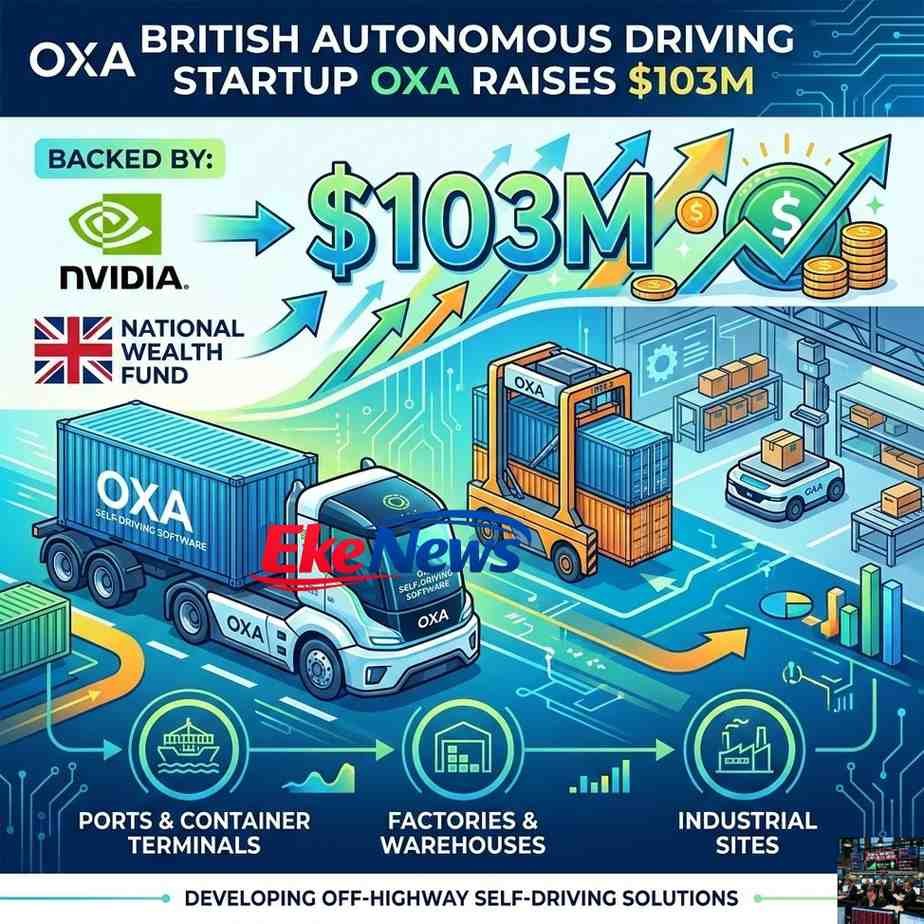
Global technology leader Nvidia has joined the United Kingdom’s National Wealth Fund in a major investment round worth approximately $103 million in British autonomous vehicle startup Oxa. The funding marks a significant step forward for the rapidly growing autonomous driving industry, particularly in the field of industrial and commercial vehicle automation.
Oxa, a company headquartered in Oxford, England, specializes in developing advanced software systems that allow vehicles to operate without human drivers. Unlike many autonomous vehicle firms that focus primarily on passenger cars, Oxa’s technology is designed for industrial environments such as airports, ports, warehouses, mining operations, and logistics hubs.
The new investment signals growing global confidence in autonomous vehicle technologies that can streamline logistics operations and increase efficiency across major industries.
What Oxa Does
Founded as a spin-out from the University of Oxford, Oxa develops artificial intelligence software known as Oxa Driver, which enables vehicles to navigate complex environments autonomously. The system integrates advanced sensors, machine learning algorithms, and mapping technologies to allow vehicles to move safely without human control.
Oxa’s technology is already being tested and deployed in several controlled environments around the world. Instead of focusing on self-driving passenger vehicles—which have faced regulatory challenges and safety concerns—the company concentrates on industrial and commercial vehicles operating in predictable environments.
These environments include:
- Airport ground transport vehicles
- Port container handling equipment
- Warehouse logistics vehicles
- Mining and industrial transport trucks
- Autonomous shuttle systems
By targeting these sectors first, Oxa aims to bring autonomous driving technology to real-world applications faster than companies attempting to fully automate consumer vehicles.
Nvidia’s Strategic Role
Nvidia’s participation in the funding round highlights the increasing importance of high-performance computing in the development of autonomous vehicles. Nvidia is widely recognized as one of the world’s leading producers of graphics processing units (GPUs), which power many artificial intelligence systems used in autonomous driving technology.
Self-driving systems require enormous computing power to process data from cameras, radar, lidar sensors, and onboard navigation systems in real time. Nvidia’s advanced AI chips and software platforms have become essential tools for companies building autonomous vehicles.
The partnership with Oxa may allow the startup to integrate Nvidia’s AI hardware and autonomous driving platforms more deeply into its technology stack.
Nvidia has also invested in numerous AI and robotics startups as part of its broader strategy to expand into industries such as robotics, logistics automation, and autonomous transportation.
For broader context on the rapid growth of artificial intelligence companies and investments, see our report: OpenAI Eyes $500 Billion Valuation in a Race to the Top.
Support from the UK Government
The investment also includes participation from the United Kingdom’s National Wealth Fund, reflecting the British government’s ambition to become a global leader in artificial intelligence and autonomous vehicle technology.
The National Wealth Fund was created to support innovative companies that could drive economic growth, technological leadership, and long-term productivity improvements in the UK economy.
Officials say supporting companies like Oxa helps strengthen Britain’s position in advanced technologies such as artificial intelligence, robotics, and smart transportation systems.
The UK government has already invested heavily in research and development programs related to autonomous vehicles, with pilot projects being conducted across multiple cities and industrial sectors.
Why Autonomous Logistics Is a Big Opportunity
While public attention often focuses on self-driving cars, experts believe the biggest economic impact of autonomous vehicles could occur in industrial logistics and transportation.
Warehouses, shipping ports, airports, and industrial facilities operate thousands of vehicles that move goods and equipment every day. Automating these vehicles could dramatically reduce operational costs while improving efficiency and safety.
Some analysts estimate that autonomous logistics systems could save companies billions of dollars annually by reducing labor costs, minimizing accidents, and improving the speed of supply chain operations.
Autonomous vehicles can also operate continuously without breaks, potentially increasing productivity in industries that rely on around-the-clock logistics operations.
Global Demand for Automation
The demand for automation technologies has increased significantly in recent years as companies seek ways to address labor shortages, rising operational costs, and growing global supply chain pressures.
Major logistics companies, shipping operators, and manufacturing firms are increasingly exploring automation solutions to maintain competitiveness in a rapidly evolving global economy.
Autonomous vehicle systems could help companies move goods faster, reduce delivery delays, and improve overall supply chain resilience.
At the same time, advancements in artificial intelligence are enabling machines to perform complex navigation tasks that were previously considered impossible without human drivers.
Challenges Facing Autonomous Vehicles
Despite the promise of autonomous driving technology, the industry still faces several challenges. These include regulatory approval, safety concerns, technological reliability, and public acceptance.
Self-driving passenger cars have faced delays due to strict safety regulations and real-world testing challenges. However, industrial applications often face fewer regulatory barriers because they operate in controlled environments.
By focusing on logistics and industrial transport, Oxa hopes to bring autonomous technology to market faster while continuing to improve its AI systems.
The Future of Autonomous Transportation
With support from major investors such as Nvidia and the UK government, Oxa plans to expand its technology development and commercial deployments worldwide.
The company aims to build partnerships with logistics companies, airport operators, and industrial businesses seeking to automate their vehicle fleets.
Industry experts believe autonomous driving technology could transform global logistics over the next decade, making supply chains faster, safer, and more efficient.
The investment in Oxa reflects growing confidence that artificial intelligence and robotics will play a central role in the future of transportation and global commerce.
What do you think? Will autonomous vehicles transform global logistics faster than self-driving passenger cars, or will safety concerns continue to slow the industry’s progress?