Historic Space Mission Breaks Record as Artemis II Carries Humans Deeper Into Space
NASA’s Artemis II mission has made history by sending astronauts farther from Earth than any humans have traveled in decades, marking a major milestone in humanity’s return to deep space exploration. The mission, which successfully carried a crew around the Moon and back, represents the first crewed journey beyond low Earth orbit since the final Apollo missions of the early 1970s.
The achievement is being widely viewed as a turning point for modern space exploration, signaling the beginning of a new era in which humans are once again venturing beyond Earth’s immediate surroundings and preparing for long-term missions deeper into the solar system.
Artemis II’s crewed flight is part of NASA’s broader Artemis program, an ambitious effort designed to return humans to the Moon and eventually establish a sustainable presence there. The mission builds on decades of technological advancements and international collaboration, setting the stage for future lunar landings and potential missions to Mars.
A Journey Beyond Earth’s Limits
The Artemis II crew traveled farther from Earth than any humans have gone since the Apollo era, venturing deep into space before performing a flyby of the Moon. The spacecraft followed a carefully calculated trajectory that allowed astronauts to orbit around the Moon before beginning their return journey to Earth.
While humans first reached the Moon during the Apollo missions, Artemis II represents a new generation of deep-space travel — one that combines modern computing, advanced propulsion systems, and improved safety technologies.
The mission demonstrated that NASA’s latest spacecraft, Orion, is capable of safely carrying astronauts on long-duration missions far beyond Earth’s orbit. The spacecraft’s performance is critical for future missions that will require extended travel time and greater autonomy from ground control.
First Crewed Deep-Space Mission Since 1972
Artemis II holds special significance as the first time in more than 50 years that humans have traveled into deep space. Since the Apollo 17 mission in 1972, astronauts have remained within low Earth orbit, primarily aboard space stations such as the International Space Station.
This long gap reflects both the technical challenges and the enormous cost associated with deep-space missions. Artemis II signals that those challenges are once again being tackled, with new technologies making such missions more feasible and sustainable.
The return to deep space is not only symbolic but also strategic. Governments and space agencies around the world are increasingly focused on the Moon as a stepping stone for future exploration, scientific research, and even potential resource utilization.
Orion Spacecraft Proves Its Capabilities
At the heart of the Artemis II mission is the Orion spacecraft, designed specifically for long-duration missions in deep space. Unlike spacecraft used for low Earth orbit missions, Orion is built to withstand extreme radiation, temperature variations, and the challenges of traveling far from Earth.
The spacecraft includes advanced life support systems, navigation technology, and communication systems that allow astronauts to operate safely even when far beyond immediate contact with Earth.
During the mission, Orion successfully completed critical maneuvers, including lunar flyby operations and trajectory corrections, proving that it is capable of supporting future missions that will involve landing astronauts on the Moon.
Preparing for the Next Phase: Lunar Landings
Artemis II is a key step toward NASA’s goal of returning humans to the lunar surface. The next major mission, Artemis III, is expected to build on this success by attempting to land astronauts on the Moon for the first time in more than half a century.
Future missions will aim to establish a long-term human presence on the Moon, including the development of lunar bases and infrastructure that can support extended stays.
These efforts are not only about exploration but also about preparing for even more ambitious missions, including sending humans to Mars. The Moon is seen as a testing ground where technologies and systems can be refined before undertaking longer and more complex journeys.
Global Interest in the New Space Race
The Artemis program is taking place in a rapidly evolving global space landscape. Countries such as China, India, and members of the European Space Agency are also advancing their own lunar and deep-space exploration programs.
This renewed interest in space has been described by some analysts as a new “space race,” though it differs from the Cold War-era competition by involving greater international cooperation alongside competition.
Private companies are also playing an increasingly important role in space exploration, contributing technology, launch capabilities, and innovation that are helping accelerate progress.
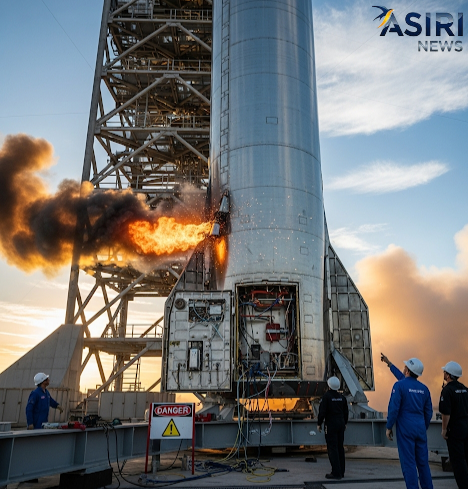
Related coverage: SpaceX Postpones Starship Launch Amidst Mounting Technical Challenges
Scientific and Technological Impact
Beyond its symbolic importance, Artemis II is expected to contribute valuable scientific data and technological insights. Deep-space missions provide opportunities to study cosmic radiation, test new materials, and improve life support systems — all of which are essential for long-term human space exploration.
The mission also demonstrates advances in navigation and communication technologies, which are crucial for missions that operate far from Earth.
These innovations often have applications beyond space exploration, influencing fields such as medicine, engineering, and telecommunications.
A New Era of Exploration Begins
The success of Artemis II signals the beginning of a new chapter in human exploration. After decades focused primarily on low Earth orbit, space agencies are once again setting their sights on deeper destinations.
For many, the mission represents more than just a technological achievement — it is a reminder of humanity’s enduring curiosity and desire to explore beyond our home planet.
As the Artemis II crew returns safely to Earth, attention is already turning to the future. With more missions planned and new technologies in development, the coming years could see humans establish a permanent presence beyond Earth for the first time in history.
Explore more science and technology breakthroughs in our Discoveries section and follow global updates in World News.
To learn more about how we report scientific and global developments, visit our Editorial Policy. You can also contact our newsroom through our Contact Page.