Oil Price Forecasts Raised as Middle East Conflict Threatens Global Energy Supply
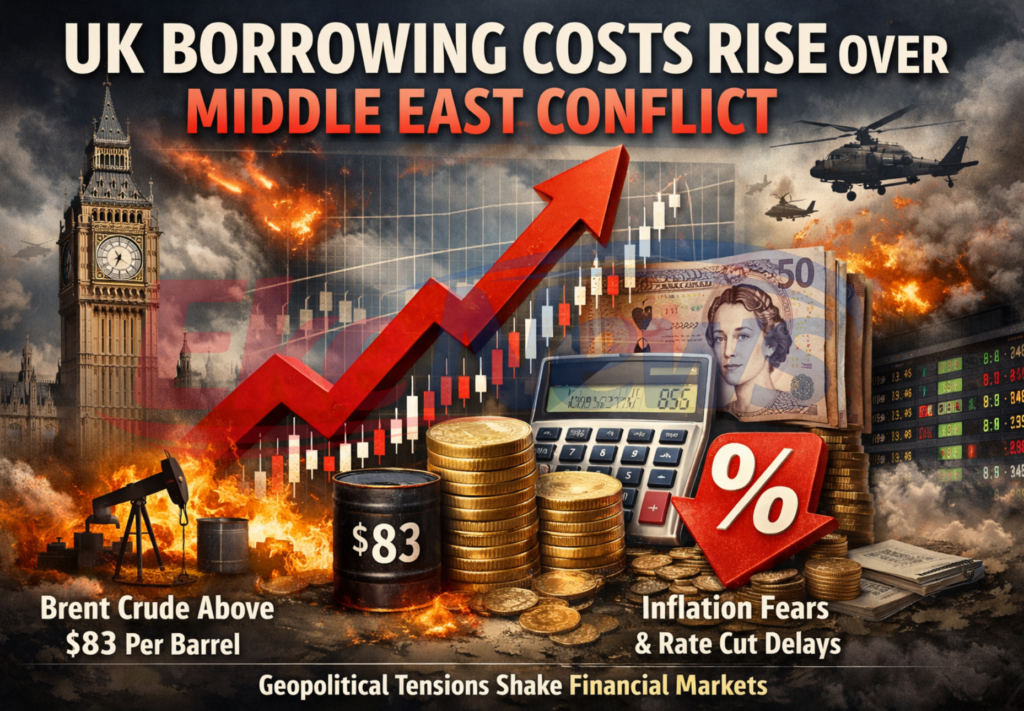
Global energy markets are once again facing uncertainty after major financial institution UBS raised its forecast for Brent crude oil prices in 2026, citing rising geopolitical tensions across the Middle East. The bank now expects Brent crude to average around $71 per barrel this year, while warning that prices could surge much higher if the ongoing regional conflict disrupts critical energy infrastructure or shipping routes.
The revised forecast reflects growing concerns among investors and energy analysts that instability in the Middle East — one of the world’s most important oil-producing regions — could trigger supply disruptions with far-reaching consequences for global markets.
According to UBS analysts, the most serious risk scenario involves disruptions to the Strait of Hormuz, a narrow maritime passage between Iran and Oman that serves as a critical gateway for global oil exports. Roughly 20% of the world’s oil supply passes through the strait, making it one of the most strategically important shipping lanes in the global energy system.
If conflict-related disruptions affect tanker traffic in the region, analysts warn that oil prices could rapidly spike above $90 per barrel — and potentially approach $100 in extreme scenarios.
Why the Strait of Hormuz Matters to Global Energy Markets
The Strait of Hormuz has long been viewed as one of the most vulnerable choke points in the international energy supply chain. Each day, millions of barrels of crude oil and petroleum products pass through the narrow waterway on their way from producers in the Persian Gulf to major consuming markets in Asia, Europe, and North America.
Any disruption to shipping through the strait — whether caused by military activity, naval blockades, or attacks on energy infrastructure — could immediately affect global oil supplies.
Historically, even the threat of disruption in the region has been enough to push oil prices sharply higher as traders anticipate tighter supplies and increased geopolitical risk.
Analysts note that the Middle East remains responsible for a significant portion of the world’s crude production, particularly from major exporters such as Saudi Arabia, Iraq, the United Arab Emirates, and Kuwait.
When tensions escalate in the region, the ripple effects often spread quickly through financial markets, shipping industries, and energy supply chains worldwide.
UBS Raises Forecast as Risk Premium Returns to Oil Markets
UBS analysts say geopolitical tensions are already beginning to introduce a “risk premium” into oil prices — a phenomenon where markets price in the possibility of future supply disruptions.
The bank’s revised forecast suggests that Brent crude could average about $71 per barrel for 2026, higher than previous projections. However, analysts caution that this estimate assumes the conflict remains relatively contained.
If attacks were to target oil fields, refineries, pipelines, or shipping routes, the impact on global supply could drive prices far beyond current expectations.
Energy infrastructure in the Middle East is particularly sensitive because large portions of global production are concentrated in relatively small geographic areas. A single major disruption could remove millions of barrels per day from the market.
Such events have historically triggered sudden spikes in oil prices, sometimes within hours.
Energy Markets React to Rising Tensions
Oil traders and financial markets are closely watching developments across the region. Any signs of escalation — including naval confrontations, attacks on shipping, or strikes on energy infrastructure — could quickly influence global commodity prices.
Higher oil prices typically ripple through the broader economy in several ways:
- Energy companies and oil producers often benefit from higher crude prices.
- Transportation and logistics industries face increased fuel costs.
- Consumers may experience higher gasoline and heating prices.
- Inflation can rise as energy costs increase across supply chains.
Because energy is such a critical input for the global economy, even moderate price increases can influence everything from airline tickets to food production.
Impact on Global Investment Strategies
Rising oil prices also influence global investment decisions. Financial institutions often adjust portfolio strategies when energy markets become volatile.
For example, higher crude prices can boost the performance of energy companies, oilfield service firms, and related infrastructure businesses. As a result, investors sometimes rotate capital into the energy sector during periods of geopolitical tension.
At the same time, industries heavily dependent on fuel — including aviation, shipping, and manufacturing — can face increased operating costs.
This dynamic often leads to shifts in global market sentiment and sector performance.
Related market analysis: Investors Eye Energy, Financials, and Discretionary as Fed Rate Cuts Loom
Energy Prices and Global Inflation
Oil price increases have historically played a major role in global inflation trends. When crude prices rise significantly, businesses often pass those costs on to consumers through higher prices for goods and services.
This can complicate economic policy decisions for central banks around the world. Policymakers attempting to control inflation may face new challenges if rising energy prices push inflation upward again.
Recent financial market movements have already been influenced by expectations surrounding interest rates and inflation trends.
Related economic coverage: Powell Hints at September Rate Cut Sending Markets Soaring
Geopolitical Risk Returns to the Forefront
Energy markets are no stranger to geopolitical shocks. Over the past several decades, conflicts in oil-producing regions have repeatedly triggered dramatic price movements.
From the oil crises of the 1970s to more recent tensions in the Gulf, geopolitical events have often served as a major catalyst for sudden volatility in energy markets.
What makes the current situation particularly sensitive is the scale of global energy demand combined with the concentration of supply in politically complex regions.
Analysts say that while markets currently expect limited supply disruptions, the situation could change quickly if the conflict spreads further.
Global Energy Security in Focus
The possibility of major supply disruptions has once again revived discussions about global energy security.
Governments and international organizations have spent years working to diversify energy sources and reduce reliance on single regions or supply routes. However, the Middle East remains a central pillar of the global oil market.
Even countries investing heavily in renewable energy continue to rely on oil for transportation, manufacturing, and petrochemical production.
This means that instability in the region can still have powerful consequences for the global economy.
Markets Watching the Strait of Hormuz Closely
For energy traders and policymakers alike, the most important variable remains the security of the Strait of Hormuz.
If the shipping corridor continues operating normally, oil prices may remain relatively stable despite rising geopolitical tensions.
However, any disruption to tanker traffic could quickly send prices soaring as global markets scramble to adjust supply expectations.
That possibility is why energy analysts and investors are watching developments in the region with increasing urgency.
The coming weeks could determine whether oil markets stabilize — or enter another period of sharp volatility driven by geopolitical risk.
More global coverage: Visit our Middle East section or follow the latest updates in Breaking News.
For editorial standards and reporting transparency, read our Editorial Policy. If you have information related to this story, you can reach our newsroom through the Contact Page.