A fragile Middle East ceasefire is facing one of its toughest tests yet as fresh violence in Lebanon and continuing tensions around the Strait of Hormuz threaten to push the region back toward a wider war.
Hopes that a temporary pause in fighting between the United States, Iran, and Israel could create space for broader diplomacy have been shaken by new military action and deep disagreements over what the ceasefire actually covers. While officials have spoken of a truce, the reality on the ground remains volatile, with cross-border military pressure, competing claims, and mounting fears that the current pause may prove too narrow to hold.
The sharpest pressure point is Lebanon. Fresh Israeli strikes have added to an already devastating conflict, with reported deaths rising above 180 in attacks that have reignited concern across the region. The scale of the casualties has intensified debate over whether Lebanon was meant to fall under the ceasefire framework or whether it remains outside the deal entirely.
That dispute matters because it goes to the heart of whether the ceasefire is a real de-escalation or only a limited pause in one part of a much broader confrontation. Iran and some mediators have argued that continued attacks in Lebanon undermine the entire effort to calm the region. Israel and the United States, by contrast, have signaled that operations linked to Hezbollah are a separate matter. That difference in interpretation has made the ceasefire fragile from the start.
Lebanon Has Emerged as the Most Immediate Flashpoint
Lebanon is now at the center of the argument over whether the region is moving toward peace or sliding back into a wider war. Airstrikes in and around Beirut have caused major destruction, deepened humanitarian fears, and raised fresh doubts about whether diplomacy can keep pace with events on the battlefield.
For civilians in Lebanon, the distinction between one front and another is becoming increasingly meaningless. Each new round of strikes increases pressure on hospitals, emergency services, and already displaced families. The political language around the ceasefire may be technical, but the humanitarian consequences are immediate and visible.
The renewed violence has also complicated the work of governments trying to prevent the war from broadening. European officials and regional actors have urged that any credible ceasefire must reduce violence across the wider theater, not only between Washington and Tehran. Without that, each new strike risks becoming a trigger for retaliation somewhere else.
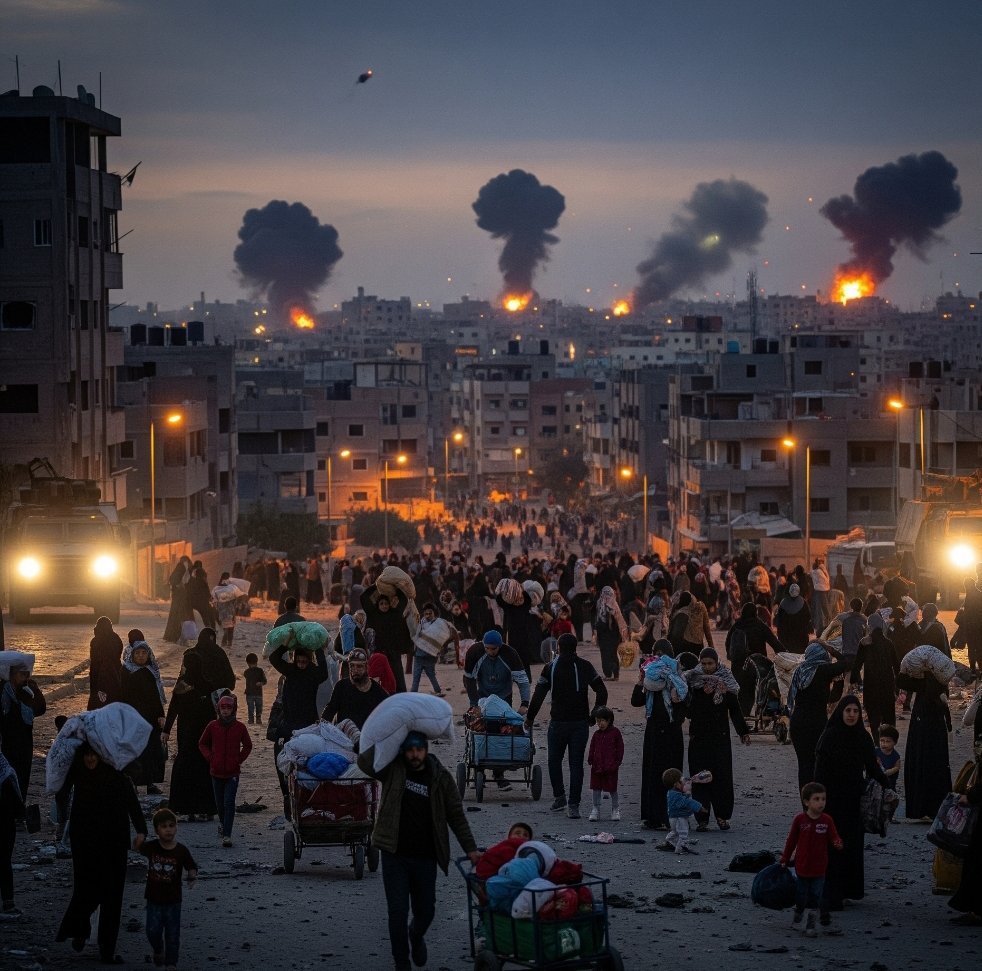
Related coverage: The Unraveling of Gaza City: A Chronicle of Devastation and Despair
A Ceasefire in Name, but Not Yet in Practice
The current truce was always likely to be difficult. Temporary ceasefires often stop one immediate cycle of attacks without resolving the bigger disputes that caused the war in the first place. In this case, those disputes remain severe: military deterrence, regional proxy forces, maritime security, missile capabilities, and the larger political future of the region.
That is why the latest violence has been so damaging to confidence. A ceasefire works only when all major actors either accept its scope or fear the consequences of violating it. Right now, neither condition appears secure enough.
Diplomatic channels are still open, and that matters. International efforts are continuing to stop the conflict from spreading. But diplomacy is under pressure from events moving faster than negotiators can contain them. The more casualties rise, the harder it becomes for leaders to sell restraint at home or compromise abroad.
The Strait of Hormuz Remains a Global Pressure Point
Even beyond the violence in Lebanon, one of the biggest reasons the ceasefire remains so fragile is the continuing tension around the Strait of Hormuz. The narrow waterway is one of the most important energy routes in the world, carrying a significant share of global oil and liquefied natural gas shipments.
Any threat to shipping through Hormuz immediately becomes more than a regional issue. It affects crude prices, tanker insurance, freight confidence, and global market stability. Traders, shipping firms, energy buyers, and governments all watch the strait closely because even short disruptions can send shockwaves through the international economy.
That is exactly what has happened in recent days. Even with talk of a ceasefire, shipping uncertainty has continued, and commercial operators have sought clarity before fully resuming normal transit. The result is a tense standoff in which the absence of full-scale war has not yet restored normal confidence.
The problem is not only whether ships can pass, but under what conditions, at what cost, and with what level of risk. As long as those questions remain unresolved, the economic effects of the conflict will continue to be felt far beyond the Gulf.
Why the Oil Route Matters to the Whole World
The Strait of Hormuz is not just another maritime route. It is a central artery of the global energy system. A major interruption there can affect fuel prices, inflation expectations, manufacturing costs, airline expenses, and consumer markets in countries far removed from the Middle East.
That is why renewed tensions in Hormuz are one of the clearest signs that the ceasefire remains unstable. A durable de-escalation would normally begin restoring confidence in shipping and energy flows. Instead, the region is still dealing with uncertainty, warnings, and the lingering possibility of escalation.
For governments trying to calm the crisis, this creates a double challenge: they must prevent new military flare-ups while also reassuring markets and maritime operators that a broader breakdown is not imminent.
Related coverage: One killed, 11 injured as Iranian strikes disrupt Dubai and Abu Dhabi airports
Diplomacy Is Still Alive, but the Margin for Error Is Narrowing
There is still a diplomatic path forward, but the room for miscalculation is shrinking. The challenge is that ceasefires do not fail only because one side officially abandons them. They can also erode through ambiguity, conflicting interpretations, and repeated violence that gradually destroys trust.
That risk is especially high now. One side may argue that its latest operation falls outside the truce. Another may see the same action as proof that the agreement is already broken. Once that cycle begins, the ceasefire can collapse even if no one formally declares it over.
At the same time, the wider region remains tense. Governments are watching not only the battlefield, but also shipping routes, energy markets, and public reaction. The conflict has already shown how quickly local military action can become a broader international concern.
What to Watch Next
The next phase of this crisis is likely to be shaped by four key questions.
First, will violence in Lebanon continue at the current pace, or will outside pressure force a slowdown? Second, can maritime confidence in the Strait of Hormuz be restored enough to reduce energy market panic? Third, will negotiators manage to clarify what the ceasefire actually includes? And fourth, can outside powers keep the conflict from widening while those talks continue?
The answers to those questions will determine whether the ceasefire becomes the first step toward a larger settlement or only a brief pause before another dangerous escalation.
For now, the situation remains deeply uncertain. The ceasefire still exists on paper, but the violence in Lebanon and the unresolved crisis around the Strait of Hormuz show just how easily it could come apart.
More coverage: Follow the latest updates in our Middle East section and more fast-moving developments in Breaking News.
Editorial standards: Read our Editorial Policy, Disclaimer, and Contact Us page for tips, corrections, and feedback.