Global Economy at Risk as Middle East War Hits Growth, Inflation and Energy Markets
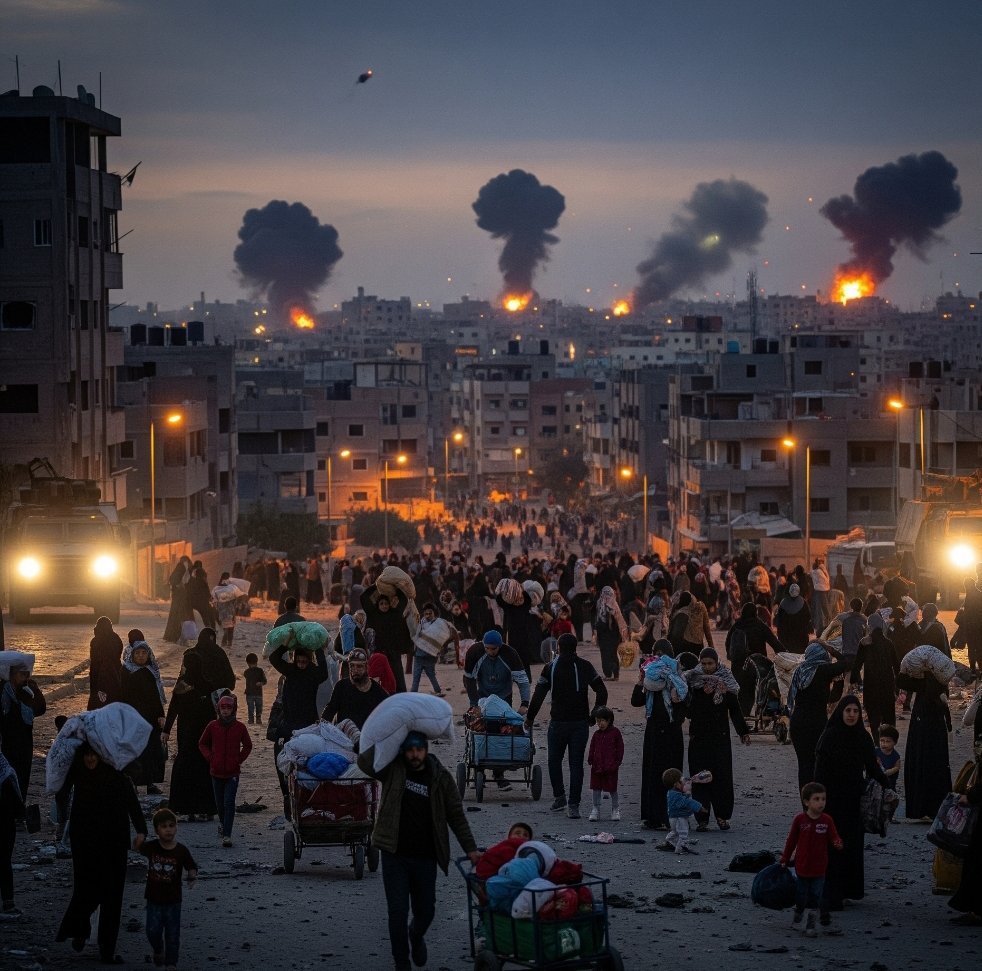
The global economy is facing a new wave of uncertainty as the International Monetary Fund warns that the ongoing war in the Middle East is already damaging growth prospects for 2026. What began as a regional security crisis is now spreading through the world economy via higher oil prices, disrupted trade routes, weaker investor confidence, and renewed inflation pressure.
In its latest outlook, the IMF cut its 2026 global growth forecast and cautioned that the conflict’s economic impact could become much more severe if disruptions to energy supplies continue. The warning has added to concerns among investors, businesses, and policymakers that the world could be moving toward a more fragile and unstable economic environment just as many countries were hoping for steadier recovery.
The concern is not limited to oil-producing countries or the Middle East itself. Because the global economy is deeply connected through energy markets, shipping lanes, financial systems, and consumer demand, even a geographically concentrated war can trigger wider consequences. That is why the IMF’s latest assessment is being watched closely by central banks, finance ministries, and markets around the world.
IMF cuts 2026 growth outlook as war darkens the global picture
The IMF has lowered its forecast for global economic growth in 2026, reflecting the growing economic cost of conflict-related disruptions. The downgrade signals that the institution believes the war is not simply a short-term geopolitical shock, but a serious threat to broader economic momentum.
A weaker growth outlook usually means slower business investment, softer consumer activity, tighter financial conditions, and reduced confidence in future expansion. These risks become even more serious when they happen alongside inflation pressure, because policymakers then face a difficult balancing act: support growth or fight rising prices.
The IMF’s message is especially important because its baseline forecast assumes a relatively limited conflict. In other words, the current growth downgrade is not based on the most extreme possible scenario. If the conflict lasts longer, damages more energy infrastructure, or further disrupts major shipping routes, the economic damage could become significantly worse.
For more business and markets coverage on Eke News, visit markets, finance, and investments.
Why oil disruptions matter so much
The biggest immediate economic threat from the war has come through energy markets. The Middle East remains central to global oil and gas flows, and any military escalation that affects production, exports, or shipping routes can quickly push prices higher. That matters because energy is still a major input cost across the world economy.
When oil prices rise sharply, the effects spread fast. Transport becomes more expensive. Manufacturing costs increase. Food distribution becomes more costly. Airlines, shipping companies, and industrial users face higher fuel bills. Households then feel the impact through more expensive transport, utilities, and consumer goods.
This is one reason economists worry so much about a conflict involving chokepoints and major export routes. Even if supplies are not completely cut off, the fear of disruption can drive prices upward. Insurance costs, shipping risk premiums, and supply uncertainty all add pressure before shortages even appear.
You can read more on the conflict’s wider regional and transport impact here: One Killed, 11 Injured as Iranian Strikes Disrupt Dubai and Abu Dhabi Airports .
Inflation fears are rising again
Inflation had already become one of the defining economic challenges of recent years. Now, the war is threatening to push prices higher again at exactly the wrong time. According to the IMF, higher oil and commodity prices linked to the conflict are lifting inflation risks and complicating the path for central banks.
This matters because many economies were only beginning to stabilize after earlier price shocks. If inflation rises again because of conflict-driven energy costs, central banks may be forced to keep interest rates higher for longer or tighten policy further. That would make borrowing more expensive for households, businesses, and governments.
The danger is not just higher prices on their own. It is the combination of weaker growth and renewed inflation pressure. Economists often view that mix as particularly difficult because it reduces room for easy policy solutions. Governments may want to support consumers, but broad subsidies can strain budgets. Central banks may want to protect growth, but doing too little could allow inflation expectations to rise.
Why recession fears are getting louder
Talk of a global recession is growing because the risks are no longer theoretical. The IMF has outlined scenarios in which a more severe or prolonged energy shock could push global growth down much further from the baseline. That does not automatically mean a recession is certain, but it does mean the margin for error is narrowing.
In practical terms, a prolonged conflict could weaken global demand, reduce trade activity, tighten credit conditions, hurt business sentiment, and push vulnerable economies into crisis. Import-dependent countries would face higher energy bills. Emerging markets could come under pressure from capital outflows and currency weakness. Lower-income households would be hit hardest by rising living costs.
Even countries that are not directly tied to the conflict can still suffer through slower exports, weaker investment flows, and tighter financial conditions. That is why the IMF’s warning is being interpreted as a global message, not merely a regional one.
Developing economies may be hit the hardest
The economic strain is expected to fall especially hard on emerging markets and developing economies. Many of these countries are more exposed to imported energy costs, exchange-rate volatility, and sudden changes in investor sentiment. They also often have less fiscal space to cushion consumers when prices rise.
If oil remains elevated and the war continues to disrupt trade and transport, poorer countries may face a difficult mix of higher import bills, rising inflation, and weaker growth. Governments could be forced to choose between protecting household incomes and preserving already-stretched public finances.
For countries already dealing with debt pressure, high food prices, or weak currencies, the conflict adds yet another layer of stress. That is one reason international institutions are warning not only about growth, but also about broader financial stability and social pressure.
Financial markets are reacting to uncertainty
Markets tend to reprice quickly when geopolitical risk rises, and that is exactly what is happening now. Investors have become more cautious as the war threatens oil flows, inflation trends, and economic forecasts. Risk assets can come under pressure in this kind of environment, while safe-haven demand often increases.
Bond yields, currencies, equities, and commodities can all move sharply when markets begin to price in a longer conflict. The IMF has warned that prolonged instability could tighten financial conditions more abruptly, raising the risk of stress in credit markets and exposing weaker balance sheets.
This is especially important because parts of the global financial system are already carrying vulnerabilities from high debt, expensive financing, and uneven post-pandemic recovery. A fresh geopolitical shock adds pressure to a system that is not fully at ease.
You can also explore related Eke News business coverage here: Powell Hints at September Rate Cut, Sending Markets Soaring , Global Markets Divided as Investors Grapple With Fed’s Mixed Signals , and Investors Eye Energy, Financials and Discretionary as Fed Rate Cuts Loom .
War is becoming an economic story, not just a military one
As the fighting expands, the economic story is becoming just as important as the military one. Wars that disrupt energy supplies and trade routes do not stay contained inside defense briefings. They show up in fuel prices, inflation data, freight costs, growth forecasts, interest-rate decisions, and government budgets.
That is why global leaders are increasingly focused not only on ceasefire diplomacy, but also on economic resilience. The longer the conflict continues, the more likely it is to reshape business planning, consumer expectations, and financial policy across multiple continents.
For broader geopolitical context on the crisis, read: A Week of Diplomatic Clashes and Military Maneuvers .
What happens next
Much now depends on whether the conflict remains limited or evolves into a deeper disruption of regional energy and transport systems. If tensions ease, oil prices could stabilize and some of the economic damage may be contained. But if the war expands or lasts longer than expected, the pressure on inflation, growth, and financial stability could intensify quickly.
The IMF’s latest warning is a reminder that the world economy remains highly vulnerable to geopolitical shocks. What happens next in the Middle East may shape not only regional security, but also the global outlook for jobs, prices, investment, and growth throughout 2026.
What do you think? Is the world economy strong enough to absorb another major energy shock, or are recession fears now becoming too serious to ignore?