Russia Maintains “Constant Contact” With Iran as War Escalates
Russia says it is maintaining “constant contact” with Iran’s leadership as the conflict involving Tehran, the United States, and Israel intensifies, raising fears that the crisis could widen beyond the Middle East and spill into global diplomatic and military arenas. The Kremlin’s confirmation signals that Moscow is closely tracking the fast-moving situation — and that Russia intends to remain a key player in whatever comes next, whether through diplomacy, strategic coordination, or pressure campaigns.
The Russian position matters because Moscow has spent years deepening ties with Tehran — politically, economically, and militarily — while also trying to preserve influence across the wider Middle East. In the current confrontation, Russia’s decisions could shape the conflict’s trajectory: it can push toward negotiations, help Tehran manage its external relationships, or harden Iran’s resistance by offering strategic support short of direct military involvement.
According to Reuters, the Kremlin said Russia was in constant contact with the Iranian leadership about what it described as “outright aggression” against Tehran and expressed deep disappointment at how events unfolded after what it portrayed as a period when diplomacy had appeared possible. Reuters also reported that President Vladimir Putin offered to use Russia’s links with Iran to help restore calm, while speaking with leaders in the Gulf region.
What Russia Said — and Why It’s a Big Signal
When the Kremlin emphasizes “constant contact,” it is doing more than offering a generic diplomatic comment. The phrase indicates that Russia is treating Iran as a strategic partner whose stability and posture are tightly linked to Moscow’s wider regional and global objectives.
Russia’s messaging has been shaped by two realities:
- First, Moscow has a long-standing interest in reducing Western influence in the Middle East and positioning itself as an alternative diplomatic center of power.
- Second, Russia benefits from projecting that it can communicate with multiple actors — Iran, Gulf states, and others — even during a major crisis.
In this moment, the Kremlin appears to be leaning into a familiar role: condemning escalatory strikes, calling for a return to political channels, and portraying Russia as a power that can help “restore calm” because it has relationships others don’t.
Putin’s Gulf Calls: A Push to Show Russia Can Mediate
Reuters reported that Putin spoke with leaders in the Gulf and offered to use Russia’s ties with Iran to help reduce tensions. That matters because Gulf states sit at the crossroads of the crisis: they are U.S. partners, they are geographically close to Iranian retaliatory capability, and they have economies that can be hit by energy shocks, airspace closures, or maritime disruption.
By contacting Gulf leaders, Moscow signals several things at once:
- Russia wants to be seen as a regional stabilizer — or at least as a necessary diplomatic channel.
- Russia is trying to prevent the conflict from expanding into a wider confrontation that could destabilize key trade corridors.
- Moscow is protecting its own interests by ensuring it has lines into the countries most exposed to spillover risks.
This strategy is especially relevant as the conflict has already produced ripple effects beyond direct battle zones, disrupting travel and security conditions in the wider region.
Related: One killed, 11 injured as Iranian strikes disrupt Dubai and Abu Dhabi airports
Russia and Iran: A Partnership Built Under Pressure
Russia and Iran have strengthened cooperation over the past decade, especially as both countries faced sanctions and political pressure from Western governments. Their relationship is not a classic alliance with automatic mutual defense guarantees, but it is a durable partnership built on overlapping interests:
- Reducing U.S. and Western leverage in regional affairs
- Expanding trade and financial pathways under sanctions constraints
- Coordinating positions on key geopolitical files
- Developing and exchanging military technology and defense coordination
As the war escalates, that relationship becomes strategically relevant in three major ways: weapons cooperation, diplomatic cover, and strategic signaling.
Military Cooperation: The Drone Factor and Weapons Systems
Russia and Iran have been repeatedly linked in reports and intelligence assessments concerning drone technology and defense cooperation. Analysts have argued that Iranian drone know-how and production lines have played a role in shaping battlefield dynamics elsewhere — and that in return, Russia may have helped Iran improve aspects of its defense posture, ranging from training and tactics to electronic warfare know-how.
That history is why Russia’s “constant contact” statement is not viewed as neutral: it raises the question of what kind of behind-the-scenes coordination may be taking place as Iran faces a direct and widening confrontation.
Still, most experts caution against assuming Russia is preparing a direct military intervention. Russia remains heavily tied down by its own security priorities and war demands, and direct confrontation with the United States would carry enormous risks. If Moscow plays a more active role, analysts generally expect it to be through diplomatic maneuvering, intelligence support, technical assistance, or strategic deterrence messaging rather than open combat.
What “Involvement” Could Look Like Without Russian Troops
When people talk about Russia’s involvement, they often imagine aircraft, ships, or troops. But in modern geopolitics, influence can be exerted in subtler ways — especially when a country wants to support a partner while avoiding a direct clash with Washington.
Possible forms of Russian involvement could include:
- Diplomatic shielding — using international forums to block, delay, or reshape resolutions and initiatives against Iran
- Technical assistance — helping Iran protect systems, harden communications, or improve resilience
- Intelligence coordination — sharing assessments or warning indicators that help Tehran anticipate threats
- Economic pathways — expanding trade routes, energy coordination, or financial channels under restrictions
- Messaging & deterrence — public statements designed to complicate the political calculus of escalation
Even one or two of these steps could have an outsized impact, especially if the conflict drags on or expands to involve more regional actors.
Why the Indian Ocean and Global Trade Routes Matter
The war is not only a Middle East story. It has implications for global trade routes, maritime security, and energy markets — especially if conflict pressure spreads along key corridors. Any sustained instability that affects shipping lanes or air travel can quickly turn into a global economic issue, influencing fuel prices, insurance costs, cargo scheduling, and tourism flows.
As global powers calculate risk, the involvement of countries like Russia becomes even more important. A major power choosing to back one side diplomatically can harden positions and reduce space for compromise. Conversely, a major power choosing to push for de-escalation can help create off-ramps before the conflict spirals further.
Russia’s Balancing Act: Support Iran, Avoid Direct Clash With the U.S.
Russia’s challenge is to maintain its partnership with Iran while avoiding an escalation that could trigger unpredictable consequences. Moscow’s posture suggests it wants to be seen as both:
- a reliable strategic partner to Tehran, and
- a pragmatic diplomatic actor that can still talk to other regional capitals
This is a classic balancing act. If Russia appears too passive, it risks weakening the credibility of its partnership. If it appears too aggressive, it risks intensifying confrontation with Western powers and destabilizing regions where Russia has built influence through diplomacy.
Could Other Global Powers Be Pulled In?
One of the most serious risks in any escalating war is that major players get pulled in not because they want to, but because events force their hand. A widening conflict can create cascading pressures — from security of energy supplies to protection of citizens abroad, to alliances and treaty expectations.
Russia’s continued close coordination with Iran adds weight to that risk profile. Even if Russia is trying to dampen escalation, its involvement increases the geopolitical complexity, because any new move by one side can trigger counter-moves by others.
That is why Moscow’s “constant contact” statement is being closely watched: it is a marker that Russia is deeply engaged and intends to shape outcomes, not merely comment from the sidelines.
How This Fits Into the Wider Regional Crisis
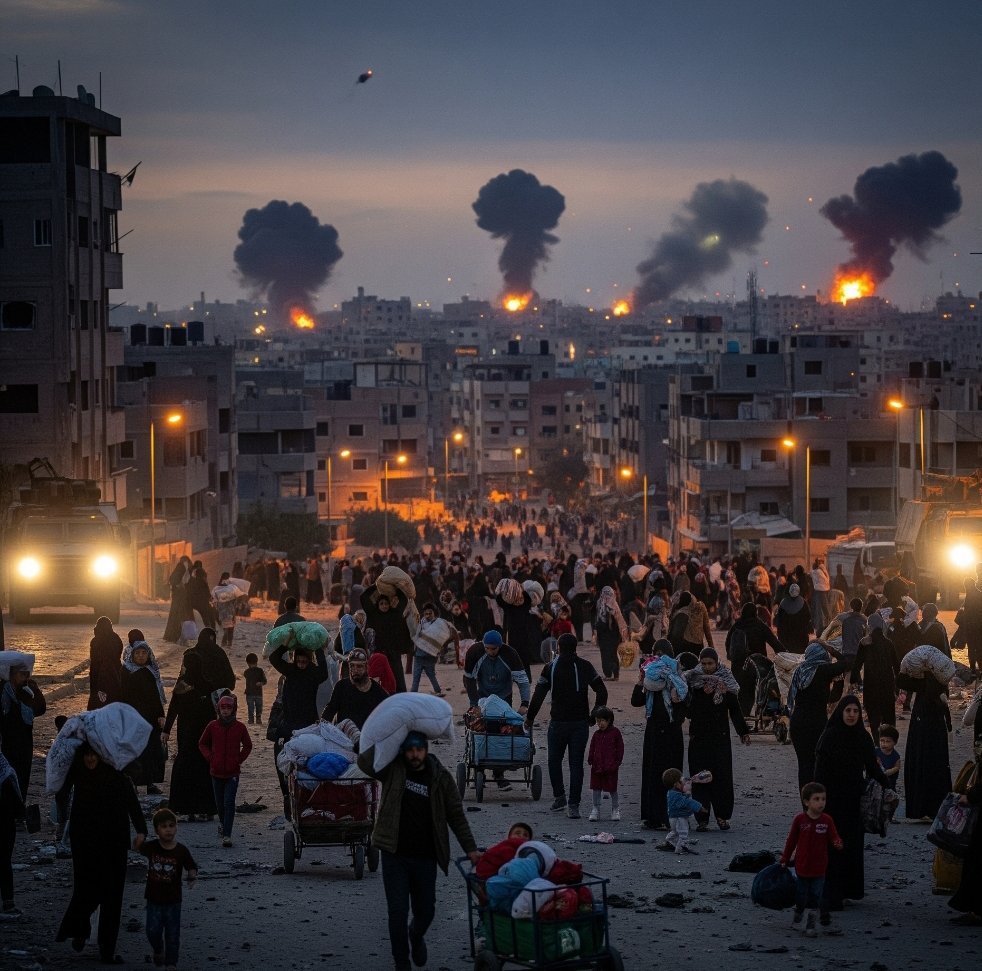
The conflict’s humanitarian and political consequences are already being felt across the region, with heightened security alerts, disrupted travel, and rising diplomatic tensions. The war’s ripple effects are also being linked to broader instability and human suffering in multiple hotspots.
Background reading: The Unraveling of Gaza City: A Chronicle of Devastation and Despair
As international pressure builds, the coming days are likely to determine whether the conflict stabilizes into a contained confrontation or expands into a wider, more unpredictable struggle involving multiple state and non-state actors.
What Happens Next
Several key signals will shape the next phase:
- Diplomatic movement — whether any credible talks resume, and which countries serve as channels
- Widening targets — whether strikes expand to more countries, bases, or critical infrastructure
- Maritime disruption — whether shipping corridors face sustained threats or restrictions
- External involvement — whether Russia, China, or other powers take steps that materially change the balance
For now, Russia’s stance is clear: maintain direct lines to Tehran, condemn what it sees as escalation, and present itself as a player capable of influencing outcomes. Whether that becomes a pathway to de-escalation — or a factor that deepens polarization — will depend on what happens next on the battlefield and at the negotiating table.
More coverage: Follow updates in Breaking News and Middle East.
Our standards: Read our Editorial Policy and Disclaimer. For tips and corrections, reach us via Contact Us.
External reporting referenced: Reuters coverage published March 2–4, 2026 (Kremlin “constant contact,” Putin offering to use links with Iran to restore calm, and Russia condemning U.S. actions against Iran).